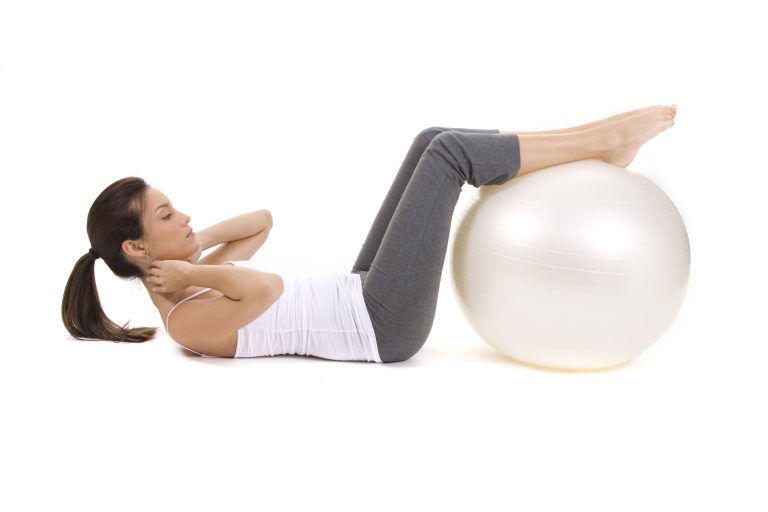
You can build stronger glutes without organizing your entire training week around them. The more useful strategy is to distribute a manageable amount of hip-extension, squat, lunge, and stability work across a balanced strength program, then progress those movements as your technique and recovery allow.
Key takeaway: Glute progress comes from repeated, progressive resistance training, not from making every session a high-volume glute workout. Use a few complementary movement patterns, track performance, and protect enough recovery capacity for the rest of your program.
Think in Weekly Training, Not Body-Part Obsession
The gluteus maximus is heavily involved in hip extension, but it does not work in isolation. Squats, lunges, step-ups, deadlift patterns, and hip-thrust variations also challenge the thighs, trunk, and other hip muscles. A 2025 systematic review and meta-analysis on gluteus maximus hypertrophy found that several forms of resistance exercise can support glute growth, including hip thrusts, squats, leg press, kneeling hip extensions, and combinations of single- and multi-joint exercises.
That matters because it gives you options. If your lower-body training already includes a squat pattern and a hinge pattern, you may not need to add several more “glute” exercises just because they are popular online. Your weekly program should account for overlap.
A good first question is: Where are my glutes already working hard? The second is: What capacity am I actually trying to improve: maximal strength, muscle size, sport performance, or general lower-body strength? Your answer should determine exercise selection more than the label attached to a workout.
Build Around Three Useful Movement Roles
A practical glute-focused plan can use three roles rather than a long list of exercises.
1. A squat or lunge pattern
Squats, split squats, reverse lunges, step-ups, and leg-press variations train the hips while also developing knee-extensor strength. Choose the version that lets you use a controlled range of motion and maintain stable technique.
2. A hinge or hip-extension pattern
Romanian deadlifts, deadlift variations, hip thrusts, bridges, and cable pull-through patterns emphasize hip extension in different ways. There is no requirement to perform all of them. One main hinge plus one secondary hip-extension option may be enough for many programs.
3. A stability or abduction accessory
Lateral band work, cable abduction, side-lying abduction, and single-leg stability drills can add targeted work for the lateral hip. These exercises are useful accessories, but they usually should not displace the larger movements that let you progressively load the hips and legs.
If you are still building comfort with resistance training, the lower-complexity approach in the best first steps for someone who feels intimidated by the gym can help you simplify exercise selection before worrying about specialization.
Progress the Work You Already Have
Adding exercises is only one way to create more training stimulus. Often it is the least elegant one. You can also improve the same movement by adding a small amount of load, performing an extra repetition with the same load, increasing range of motion when appropriate, improving control, or doing an additional set when recovery is good.
Research on resistance training more broadly shows that heavier loads tend to have an advantage for maximal strength outcomes when training volume is matched, while muscle growth can occur across a wider loading range. A 2022 systematic review and meta-analysis supports that distinction. For a glute-strength goal, that means at least some of your work should become meaningfully challenging over time rather than remaining permanently light because the exercise “burns.”
Progress should still be gradual. If your last repetitions become sloppy, your lower back takes over, or your range of motion shrinks simply to move more weight, the new load may not represent useful progress.
Spread Glute Work Across the Week
You do not need a dedicated glute day, but you can give the glutes multiple opportunities to work. One lower-body session might emphasize a squat and a hip thrust, while another emphasizes a hinge and a split squat. A full-body day might include step-ups or a short accessory block.
This distribution can keep individual sessions from becoming so long or fatiguing that later exercises lose quality. It also leaves room for upper-body strength, cardio, mobility, and sport-specific work.
A sample structure could look like this:
- Session A: squat variation, hip thrust, upper-body work, optional lateral-hip accessory.
- Session B: Romanian deadlift or another hinge, split squat or step-up, upper-body work.
- Session C: full-body session with one moderate glute-focused movement if recovery is good.
Treat this as an example, not a universal frequency rule. Your training age, total workload, sleep, nutrition, sport practice, and individual recovery change how much work is useful.
Do Not Confuse Activation With Growth
A strong muscle “burn,” high electromyography reading, or intense warm-up sensation does not automatically mean an exercise will produce the best long-term strength or hypertrophy result. Activation research can help describe what muscles are working during a task, but long-term adaptation depends on repeated training, sufficient loading, progression, and recovery.
That is why glute activation before lower-body training should usually be used to prepare for the main work rather than to exhaust the target muscles before heavy sets. If ten minutes of band work makes your squat or hinge noticeably worse, the warm-up may be competing with the workout.
Watch for the “More Is Better” Failure Points
High glute volume can become counterproductive when it creates persistent soreness, technique breakdown, or so much local fatigue that you cannot progress your main lifts. It can also crowd out other movement qualities. Strong glutes are useful, but so are strong quadriceps, hamstrings, calves, trunk muscles, upper body, and aerobic capacity.
Another common mistake is changing exercises constantly. If every week introduces a new kickback angle, band variation, stance width, or machine setup, it becomes hard to tell whether you are improving. Keep enough stable exercises in the program to track performance over time.
Fueling matters as well. If your lower-body sessions consistently feel flat late in the day, how to eat for energy if you crash every afternoon can help you review meal structure and other possible contributors without assuming that food is the only cause.
Measure Progress Without Chasing Soreness
Useful progress markers include performing more high-quality repetitions with the same resistance, using a heavier resistance for the same repetitions, improving control through a consistent range of motion, and recovering well enough to repeat productive training the following week. Depending on your goal, changes in sprinting, jumping, hiking, or other performance tasks may also matter.
Soreness is less informative. Some people become less sore as they adapt even while strength improves. Others can create soreness easily with novelty but make little measurable progress. Track what your training is supposed to improve.
Make Glute Progress Fit the Whole Program
The most sustainable glute plan is one that makes the rest of your training better rather than smaller. Pick a squat or lunge pattern, a hinge or hip-extension pattern, and a limited amount of accessory work. Keep those movements long enough to evaluate them, progress them gradually, and reduce volume when fatigue begins to erode technique or performance.
Your next step is to audit the lower-body work already in your week. Count where the glutes receive meaningful resistance before adding anything new. In many cases, better progression of the exercises you already perform will do more than another “glute day.”