
A memorable character design is animation-friendly when the audience can recognize the character quickly and the production team can move that design through many emotions, angles, and actions without losing appeal. The strongest designs balance personality with practical movement, so they are not just attractive drawings but repeatable performances.
Quick Read: Animation-friendly character design usually comes down to silhouette, construction, proportion, expression range, costume behavior, and production repeatability. A design can be beautiful and still become difficult to animate if its details hide the pose, break when turned, or limit acting choices.
Shape Language That Survives Motion
A character has to communicate before anyone hears a line of dialogue. That starts with the silhouette: the overall outside shape of the body, hair, costume, and pose. If the silhouette is clear, viewers can identify the character in a crowded frame, at a distance, or during fast action. If it is noisy, the audience may feel visual confusion before they understand the scene.
Animators often talk about appeal, staging, exaggeration, and squash and stretch because those classic principles of animation help a drawing or model feel alive. Character design is where many of those principles either become easy or frustrating. A character with a clean line of action can lean, leap, cower, or celebrate without collapsing into a tangle.
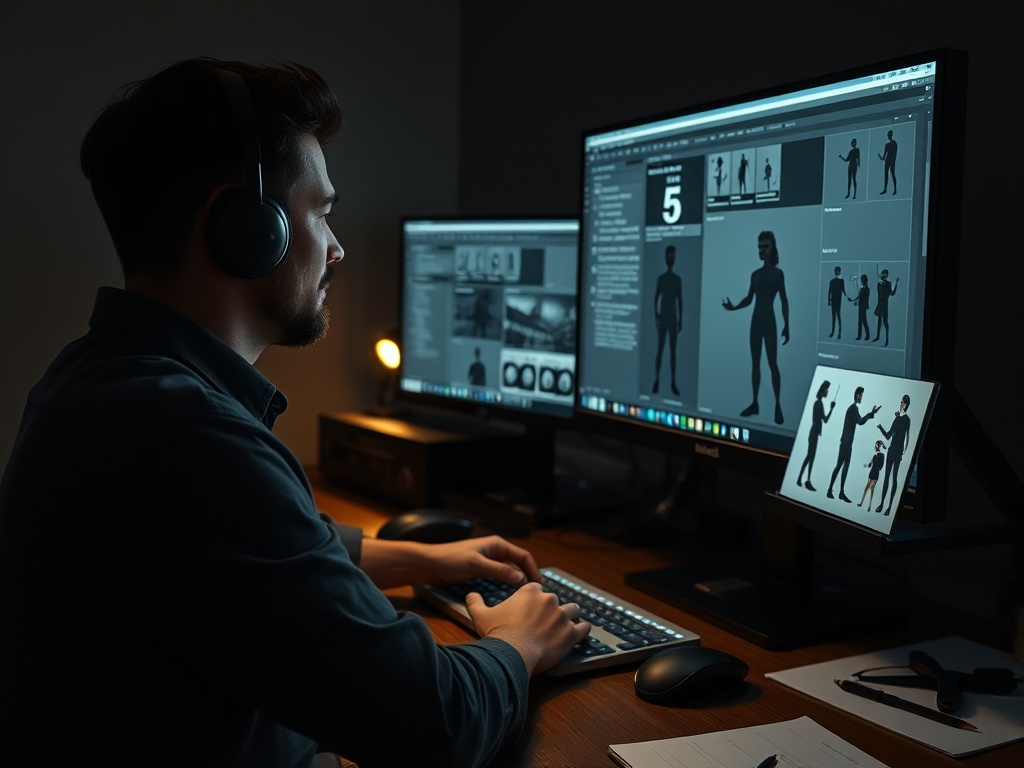
A simple test is to fill the character shape in black and remove all interior details. If the character still feels recognizable, the design has strong readability. If it only works because of color, texture, or tiny symbols, it may need simplification before animation begins.
Construction, Rigging, and Acting Range
Animation-friendly designs have structure under the style. That does not mean every character must be realistic. A flat graphic mascot, a rubber-hose figure, a stop-motion puppet, and a high-end 3D hero all need internal logic. The head, torso, joints, eyes, mouth, and hands must have rules that the team can follow.
This is where many memorable designs separate themselves from decorative designs. A strong character is not just a costume; it is a system for performance. Readers comparing surface appeal with deeper character truth may also enjoy what makes a celebrity documentary feel revealing instead of strategic, because both topics ask how presentation can support or hide personality.
The face should support clear emotional changes. The hands should be large or simple enough to show intention. The body proportions should help the kind of acting the story needs. A shy character may benefit from a compact posture and shoulders that can rise toward the face. A bold character may use a broad stance and shapes that create confident lines.
Table: Design Choices That Help the Team
| Design choice | Why it helps animation | What to test early |
|---|---|---|
| Readable silhouette | The pose remains clear before details, lighting, or dialogue are added. | Shrink the pose to thumbnail size and check if the action still reads. |
| Simple construction | Animators and riggers can rotate, squash, stretch, and pose the form consistently. | Turn the character in front, side, and three-quarter views. |
| Expressive face and hands | Small acting choices become visible without overloading the shot. | Test neutral, fear, joy, anger, and quiet thought poses. |
| Costume that follows motion | Cloth, hair, and props support timing instead of fighting the rig. | Animate a walk, sit, jump, and quick head turn. |
Detail Without Visual Noise
Beginners often assume a character becomes memorable by adding more: more belts, brighter colors, extra markings, unusual hair, complicated jewelry, or highly specific shoes. Detail can help, but only when it serves recognition and movement. In animation, every detail may need to be modeled, textured, rigged, tracked, lit, corrected, or redrawn. A small decorative idea can become expensive if it appears in hundreds of shots.
A more useful question is: what is the smallest set of details that makes this character unmistakable? That could be a triangular cloak, a round head, a broken rhythm in the hair, a particular walk, or a contrast between tiny legs and a large expressive face. Details that support story and motion earn their place. Details that only prove the designer worked hard often create clutter.
Color also has to behave. A palette can show role, mood, or contrast, but it should not depend on perfect lighting to remain clear. A character with similar values across hair, clothes, and skin may blend together in dim scenes. A character with one strong accent color can be easier to track, especially in action-heavy shots.
Testing Before Final Approval
Before calling a design finished, create an acting sheet. Include a neutral stance, a big emotional pose, a small emotional pose, a seated pose, a fast motion pose, and a profile view. For a facial character, add expression tests with the mouth open, closed, smiling, tense, and asymmetrical. For a creature or mascot, test how much emotion the eyes, head tilt, tail, ears, or body compression can carry.
This protects the audience experience as much as the schedule. When a character can move through different emotional states while still feeling like the same person, viewers build recognition and attachment. Anyone planning a long-term art or animation path should be wary of the idea that passion alone solves production limits; myths about passion careers that make sustainable planning harder explores that mindset from a career angle.
Some trade-offs are worth discussing early with animators, modelers, riggers, and directors: can the character turn without changing identity, do the proportions allow readable weight shifts, are the eyes and mouth large enough for the emotional range, and will hair, capes, bags, or jewelry distract from the pose?
Final Design Checkpoint
Before a character moves into full production, run a final review that asks three questions. First, can the audience identify the character in one second? Second, can the team animate the design repeatedly without losing its personality? Third, does every major design feature help story, motion, or recognition? For a wider view of designing experiences around real audiences, how school, family, and adult programming shape museum relevance offers a useful parallel.
One practical next move is to run a one-page animation test before committing to polish. Put the character through a walk, a turn, a reaction, and a quiet pause. If the design stays readable in all four, the team has a stronger foundation than a single finished illustration can prove.
Treat the last design pass as a performance test, not a beauty contest. A character is ready when it can be recognized, posed, simplified, and emotionally stretched without breaking. Use that standard, and the design will be easier for teams to animate and easier for viewers to remember.