Museum relevance is shaped less by what an institution owns and more by how different people are invited to use, question, and connect with those collections. School, family, and adult programs turn a museum from a place of display into a place of learning, memory, debate, and belonging.
Useful Lens: A museum program is relevant when it respects the needs of its audience without flattening the museum's mission. A school visit, a family workshop, and an adult lecture can all use the same collection, but they should not feel like the same experience with different labels.
Why Programming Turns Collections Into Public Value
Museums often hold objects, artworks, archives, specimens, and stories that matter across generations. Yet a collection becomes publicly meaningful only when people can approach it. Programming is the bridge. It helps visitors know why a gallery matters, how to ask better questions, and where their own lives connect to the material.
The American Alliance of Museums describes education and interpretation as central to the way museums support lifelong learning, from school visits to creative aging programs. Its education and interpretation resources show how broad museum learning can be. That breadth matters because the word museum covers science centers, art museums, history museums, cultural heritage institutions, children's museums, university galleries, and more.
Relevance does not mean chasing every trend. It means creating entry points that match real visitor needs. A third-grade class may need a tactile, question-driven activity. A family may need a relaxed environment where children can move and adults can still learn. An adult audience may want a curator conversation that connects an exhibition to migration, design, climate, labor, or local memory.
School Visits That Teach Observation
School programming often creates a person's first structured museum experience. A strong school program does more than move students from case to case. It gives them a reason to look, compare, infer, and speak. The best museum educators know that students are not empty containers waiting for facts. They bring language, culture, curiosity, skepticism, and prior knowledge.
Good school programs usually include preparation before the visit, facilitated inquiry during the visit, and follow-up after the visit. Preparation reduces anxiety and gives teachers a reason to connect the museum to classroom goals. Facilitation keeps the visit from becoming a passive tour. Follow-up helps students turn a memorable day into longer learning.
Table: Different Audiences, Different Design Needs
| Audience group | What they often need | Programming signal of relevance |
|---|---|---|
| Schools | Curriculum connection, age-appropriate inquiry, manageable logistics. | Pre-visit materials, educator guides, and sessions that invite questions. |
| Families | Flexible pacing, hands-on moments, comfort with mixed ages. | Drop-in activities, clear wayfinding, and spaces for breaks. |
| Adults | Depth, dialogue, social context, and practical access. | Talks, workshops, evening programs, community partnerships, and hybrid formats. |
Family Learning Without Forcing One Pace
Families rarely move through museums like school groups. A family visit may include a toddler, a teenager, a grandparent, and an adult who is trying to read labels while managing snacks, bathrooms, fatigue, and attention spans. Programming that ignores those realities can make a museum feel unwelcoming even if the exhibition is strong.
Family programs work best when they offer flexible participation. A drop-in art station, a short gallery prompt, a scavenger-style observation activity, or a weekend demonstration can make the museum usable without forcing everyone into a long formal session. This connects closely with live entertainment, where accessibility services change the live event experience for attendees by turning access from an afterthought into part of the event design.
Accessibility also matters. The Association of Science and Technology Centers has guidance on accessible museum programming that applies beyond science centers: online materials, captioning, pacing, sensory considerations, and inclusive planning all affect who can take part.
Adult Programs and Civic Relevance
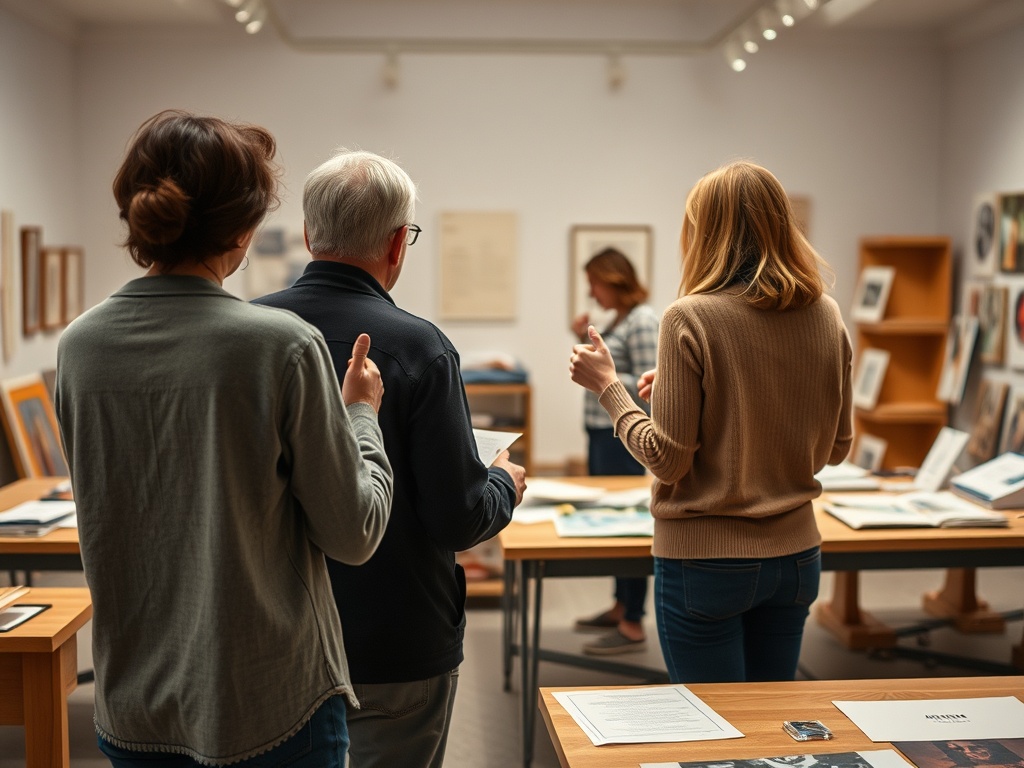
Adult programming is sometimes treated as a bonus: lectures, talks, salons, film nights, workshops, tours, or member events. In practice, it can be one of the strongest tools for relevance. Adults return when museums help them think, make, discuss, and connect with others.
This is where museums can move beyond basic interpretation. A photography exhibition might become a conversation about surveillance, family memory, or image ethics. A craft collection might open a workshop on repair, labor, and material knowledge. The Group for Education in Museums' Museum Learning Research 2024 is a useful reminder that museum learning includes formal, informal, digital, participatory, and community-based approaches.
Adult programs also help museums avoid the trap of being useful only for school trips or tourism. They can host difficult conversations, support creative practice, and make collections feel connected to ongoing questions rather than sealed in the past. People often judge releases, exhibitions, or events by the loudest reaction online, but how to track discourse around a release without mistaking loudness for consensus explains why public response needs careful reading.
Building Museums People Return To
Designing programs for multiple audiences creates pressure. A museum cannot do everything. Too many disconnected programs can stretch staff, confuse the public, and dilute the institution's purpose. Relevance requires focus. A practical way to plan is to ask which audience the program truly serves, what collection or community need it connects to, and what participants should notice, feel, discuss, or do afterward.
A useful programming audit is to follow one object or artwork through three experiences. How would a teacher use it with students, how would a family encounter it on a busy weekend, and how would an adult group discuss it in depth? If the same object can support all three without losing accuracy, the museum has found a strong interpretive core. If each program requires a completely separate story, the institution may need a clearer public framework before adding more events.
Museums can also use programming data carefully. Attendance, repeat visits, teacher comments, membership renewals, accessibility requests, and informal visitor questions all show different parts of relevance. A sold-out evening program is not automatically better than a small workshop that builds trust with a community partner. The right measure depends on the purpose of the program and the audience it was built to serve.
Programming is strongest when it invites repeated, varied relationships. A child may first arrive with a class, return with family, and later attend an adult program. In that arc, the museum becomes more than a building. It becomes a resource across life stages. For another example of designing an idea so real people can use it repeatedly, see what makes a memorable character design animation-friendly. Start by making one program more useful for one audience, then listen carefully.