Many common cleaning rules confuse “stronger” with “better.” In practice, the safest and most effective approach is usually to match the product to the soil and surface, follow the label, clean before disinfecting when disinfection is actually needed, and never improvise chemical mixtures.
Myth Check: More product is not automatically more effective. Disinfecting is not required on every household surface all the time. “Natural” does not automatically mean harmless. Vinegar is useful for some cleaning tasks but is not a universal cleaner. Mixing products can create dangerous reactions rather than extra cleaning power.
Myth 1: A stronger chemical always cleans better
Cleaning performance depends on chemistry, contact, time, temperature, mechanical action, and the type of soil being removed. A harsher product can damage finishes without improving the result. Acidic products can etch some stone; alkaline products can affect other surfaces; abrasives can scratch coatings; solvents can soften finishes.
The better practice is to start with the mildest product that is compatible with the surface and intended for the job. Read the label for dilution, dwell time, rinsing, ventilation, and protective equipment. If a manufacturer of the countertop, floor, appliance, fixture, or coating gives cleaning instructions, those instructions should take priority over a generic home-cleaning tip.
This is also why “one bottle for the whole house” is often unrealistic. A glass cleaner, degreaser, soap solution, mineral-deposit remover, and disinfectant solve different problems. The useful goal is not maximum chemical strength but correct product-to-task matching.
Myth 2: Disinfect every surface every time
The U.S. Centers for Disease Control and Prevention distinguishes cleaning from disinfecting. Cleaning uses water, soap or detergent, and physical action to remove dirt and many germs. CDC guidance says routine cleaning is sufficient in many home situations, while disinfection is more relevant when someone is sick or when a household member has particular vulnerability.
That distinction matters because disinfectants have instructions for pre-cleaning, contact time, surface compatibility, and safe use. Spraying a disinfectant and wiping it off immediately may not follow the label. Using one where it is unnecessary can add chemical exposure and surface wear without a clear benefit.
A practical routine is to clean visible soil first. Then disinfect selected high-touch or contaminated surfaces when circumstances call for it and the surface can tolerate the product.
Myth 3: Bleach can be mixed with another cleaner for extra power
This myth is unsafe. CDC says never mix household bleach or disinfectants with other cleaners or disinfectants because dangerous vapors can be released. The safe rule is simple: use one product according to its label, provide ventilation as directed, and rinse or wait as required before switching products.
Bleach is also not the same thing as cleaning. CDC recommends cleaning visibly dirty surfaces before disinfecting with bleach. Grease, soil, and organic material can interfere with disinfection, so a “strong” disinfectant does not replace the first cleaning step.
If you inherit an unlabeled spray bottle or cannot identify what was used on a surface, do not add another chemical in an attempt to “neutralize” it. Ventilate, keep people and pets away as appropriate, and follow poison-control or product-safety guidance if exposure is suspected.
Myth 4: Vinegar is a universal disinfectant and surface cleaner
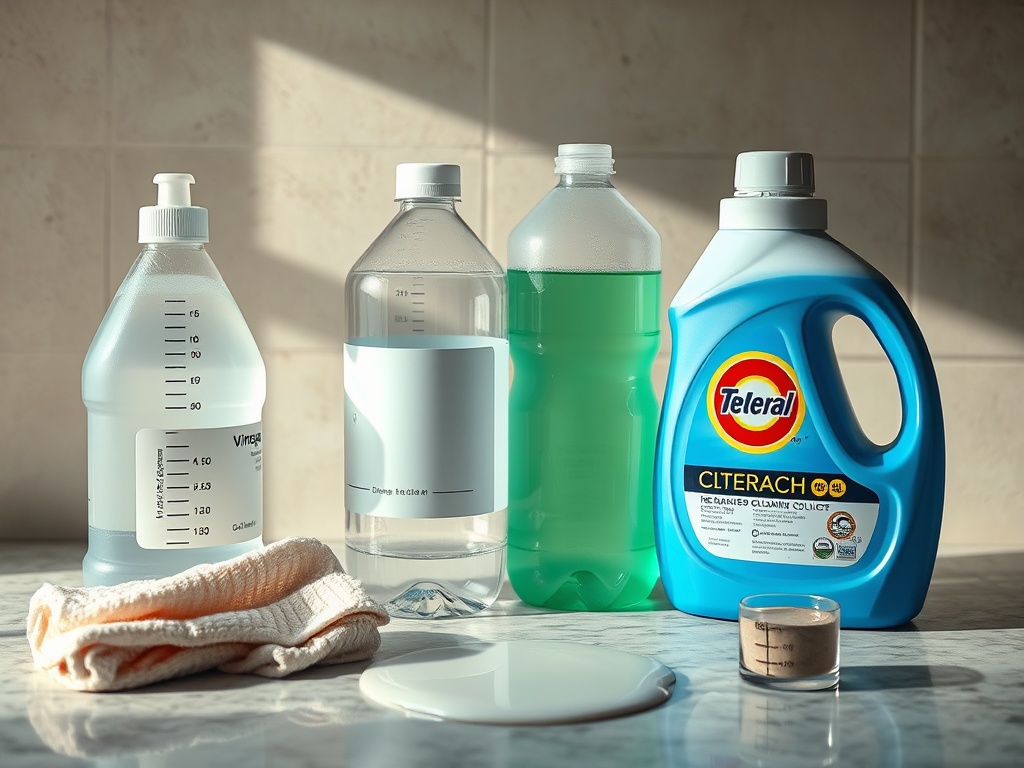
Vinegar is an acidic household chemical that can help with some mineral deposits and certain cleaning jobs, but “natural” origin does not make it universally safe or effective. It can damage acid-sensitive stone, some grout or finishes, and certain appliance components. It should not be used in place of an EPA-registered disinfectant when a specific disinfecting claim is required.
The U.S. Environmental Protection Agency discusses homemade cleaners such as vinegar and baking soda in its Safer Choice frequently asked questions. EPA notes that household chemicals can be useful but can also create hazards when used incorrectly, and that formulated products are designed for defined performance.
Use vinegar only where the surface manufacturer permits it and where its chemistry matches the deposit you are trying to remove. That is a narrower, more defensible use than treating it as a universal cleaner.
Myth 5: If a product is “green” or “natural,” it cannot be hazardous
Marketing language and hazard are not the same thing. Concentration, exposure route, pH, fragrance ingredients, solvents, and the way a product is used all matter. Even familiar household materials can irritate skin, eyes, or lungs, or react with other substances.
For shoppers who want a more structured way to evaluate cleaning products, EPA’s Safer Choice program reviews product ingredients against health and environmental criteria. A certification program does not mean every product is risk-free or appropriate for every surface, but it offers more information than relying on a vague front-label claim.
The practical habit is to read hazard statements and directions even when packaging uses reassuring language. Keep cleaners in original containers, away from children and pets, and never transfer them into food or drink bottles.
Myth 7: A clean smell proves the room is clean
Fragrance can influence how a room feels, but it is not a test for soil removal or disinfection. A fragranced product can leave a strong scent on a dirty surface, while an unscented product can clean effectively. Likewise, odor removal may require eliminating the source rather than covering it.
Treat scent as a preference, not proof. If a musty odor keeps returning, look for moisture, damp textiles, poor ventilation, a drain problem, or another source. Persistent moisture or suspected mold growth may require professional assessment rather than stronger fragrance.
This is where decluttering helps indirectly. Easier access to countertops, floors, and appliance surfaces can make regular cleaning simpler. These countertop appliance storage ideas focus on storing equipment by frequency and safety instead of moving clutter from one hidden spot to another.
Build a cleaning routine around labels and surfaces
A reliable home routine can be simple: remove clutter, dry-dust or vacuum loose debris, clean with an appropriate product, rinse when required, dry sensitive surfaces, and disinfect selectively when there is a reason. Store products securely and keep incompatible chemicals separate.
For small apartments and outdoor living areas, product choice can also depend on ventilation and runoff. If you are organizing a balcony, review balcony privacy ideas for apartments before adding screens, planters, or textiles that may create extra cleaning and drainage needs.
The most useful replacement for cleaning myths is a short decision process: identify the surface, identify the soil, read the product label, test when uncertain, and avoid chemical improvisation. That approach is less dramatic than a “miracle hack,” but it is easier to defend and repeat.
This article is for general educational purposes. Follow product labels, surface-manufacturer instructions, local disposal rules, and appropriate poison-control or professional guidance for chemical exposures or hazardous conditions.[/