
Prepare raised beds for winter by removing diseased plant material, deciding what healthy residue can stay, protecting bare soil with mulch or a suitable cover crop, checking the bed structure and irrigation, and planning amendments from a soil test rather than adding fertilizer automatically. The exact timing depends on climate and what you intend to grow next.
Winter Bed Plan: Clear problem plants first, keep the soil covered, disturb the soil as little as practical, protect irrigation from freezing where needed, repair the frame before severe weather, and record what grew in each bed so spring crop rotation is easier.
Harvest first and decide what should remain
Finish harvesting warm-season crops before hard freezes damage produce you intend to use. Some cool-season vegetables can remain longer or overwinter in suitable climates, so the bed does not need to be stripped simply because the calendar says autumn.
Separate plant material into healthy and diseased categories. Healthy, seed-free residues can often be composted or used in an appropriate garden system. Material affected by persistent disease or heavy pest pressure may need different disposal based on the organism and local guidance. Avoid assuming a home compost pile will reliably destroy every pathogen or weed seed.
Leaving some non-diseased stems elsewhere in the garden can support overwintering insects and birds, but a vegetable raised bed has different sanitation needs than an ornamental border. Balance habitat goals with the disease history of the crop.
Remove weeds before they set next season’s problem
Pull annual weeds before mature seed scatters. For perennial weeds, remove as much of the root or crown as practical rather than chopping it into many pieces. If the bed has a persistent weed problem, identify the species before choosing a control method because roots, rhizomes, stolons, and seed behave differently.
Do not overwork wet soil. Repeated digging can damage soil structure and create compaction, particularly when the bed is saturated. Raised beds reduce foot traffic in the growing area, so preserve that advantage by working from the paths and using hand tools only as needed.
Penn State Extension’s recent guidance on soil health in raised beds emphasizes minimizing disturbance, keeping soil covered, increasing plant diversity, and maintaining living roots where practical. Those principles are a useful framework for winter preparation.
Keep the soil covered through the off-season
Bare soil is exposed to erosion, crusting, weed establishment, and temperature swings. Cover can come from living plants or mulch. Which option is better depends on your climate, timing, spring planting date, and willingness to manage a cover crop.
Organic mulches such as shredded leaves, clean straw, or finished compost can protect the surface. Oregon State University Extension recommends covering raised beds with organic material over winter and notes that organic matter decomposes over time. Its raised-bed gardening guidance is a useful regional example, though gardeners should adapt timing and materials to local conditions.
Avoid burying the bed under material that contains mature weed seed, persistent herbicide residues, or diseased crop debris. If using leaves, shredding can help keep them from matting or blowing, but whole leaves may also work when contained and not forming a water-shedding layer.
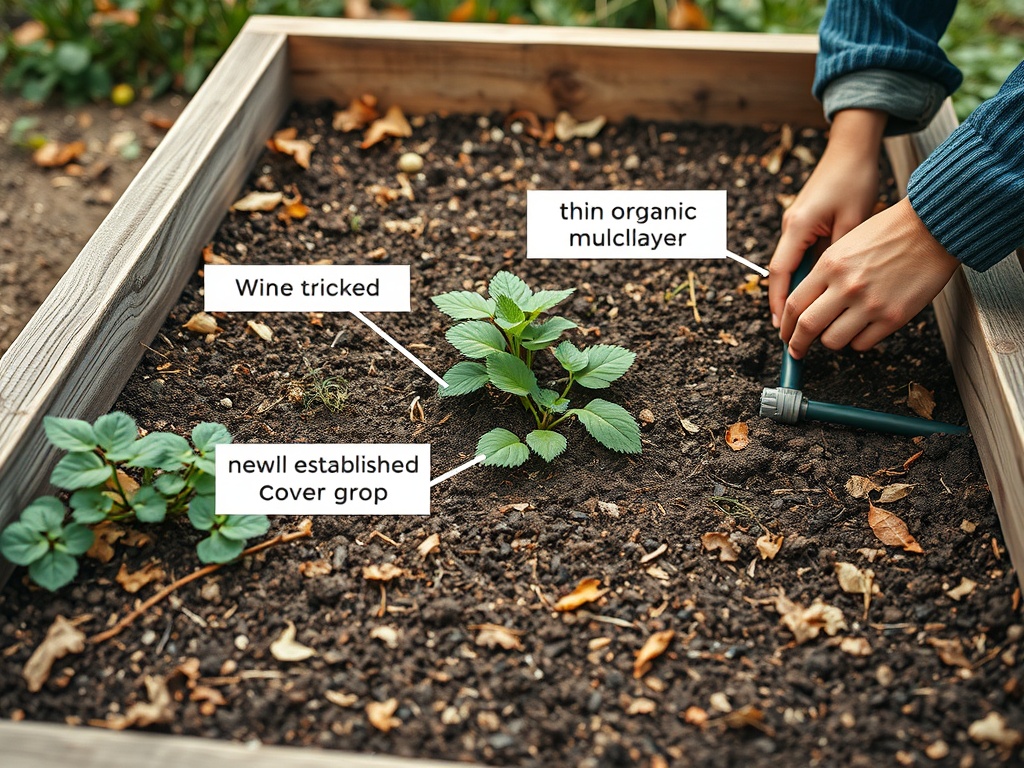
Plant a cover crop only when timing supports establishment
Cover crops can protect soil and add living roots, but they are not a last-minute fix in every climate. Species differ in cold tolerance, seeding window, winter survival, and spring termination requirements. A crop planted too late may barely establish before cold weather.
Penn State Extension describes cover crops as a way to keep raised-bed soil covered and potentially support organic matter, erosion control, nutrient retention, and weed suppression. Its home-garden cover crop guidance stresses planning in late summer or early fall rather than waiting until winter is underway.
Choose species with help from a local extension service or seed supplier familiar with your region. Also decide how the crop will be terminated in spring. Some winter-killed crops leave an easy mulch; winter-hardy species may require cutting, crimping, or other management before planting.
Add compost with a reason, not by habit
A thin layer of finished compost can protect the surface and add organic matter, but raised beds do not need unlimited compost every year. Repeated heavy applications can contribute to excessive nutrient levels, especially phosphorus, depending on the compost and soil.
Use a soil test when fertility decisions matter. If the test shows adequate nutrients, focus on soil cover and structure instead of adding fertilizer “for winter.” Fertilizers should match crop needs, soil results, and product instructions rather than a seasonal ritual.
Fresh manure deserves special caution because pathogen risk and nutrient concentration vary. Follow local extension guidance on manure use and the time interval between application and harvesting edible crops.
Drain and winterize irrigation where freezing is possible
Drip tubing and fittings left full of water can be damaged by freezing conditions, depending on the system. Shut off the supply when irrigation is no longer needed, drain or blow out components only according to the manufacturer’s instructions, and store removable timers, filters, pressure regulators, or delicate fittings where recommended.
Avoid using high-pressure compressed air unless the irrigation system specifically permits it and you know the correct procedure. Excess pressure can damage emitters or fittings and can create a safety hazard.
While the system is exposed, inspect for chewed tubing, clogged emitters, cracked connectors, and leaks. Label lines if you plan to reconfigure the bed in spring.
Inspect the raised-bed frame and paths
Winter is harder on a weak structure than on a sound one. Check wood for rot, fasteners for corrosion or loosening, metal edges for sharp damage, and masonry for movement. Repair bowing sides before saturated soil and freeze-thaw cycles add more stress.
Look at the paths, too. Water should not pond against the outside of the bed or foundation of a nearby structure. Add or refresh path mulch where mud and erosion are recurring problems, but maintain drainage and keep materials away from building details that require clearance.
If the beds are near windows or exterior repairs that need autumn attention, this window maintenance guide can help coordinate seasonal tasks without disturbing the garden twice.
Revisit the bed before spring planting
Winter preparation is not the final step. Check mulch after severe wind, heavy rain, or snow. Make sure protective covers have not become waterlogged or blown into drains. If rodents or slugs use deep mulch as shelter in your region, adjust the material or placement based on local advice.
As spring approaches, remove or pull back mulch only when needed for soil warming and planting. Terminate cover crops with enough time for residues to become manageable. Avoid digging wet soil simply because the first warm day arrives.
A prepared raised bed should enter winter protected rather than stripped bare. Keep the soil covered, make additions based on evidence, and leave yourself notes so spring begins with a plan instead of a cleanup project. For broader seasonal home tasks, the principles in cleaning product myths that don’t hold up are also useful when selecting cleaners for tools, frames, or nearby surfaces: match the product to the material and follow the label.
Gardening information is general and may not fit every climate, soil, crop, pest, or local regulation. Use local extension guidance for region-specific planting, amendments, pesticide use, and winter protection.