Catering, signage, and guest logistics stay manageable when each task has one owner, one deadline, and one test point. The goal is not more coordination meetings, but fewer hidden handoffs.
Key Takeaways
- Map the guest journey before assigning vendors or printing signs.
- Use owners and checkpoints for catering counts, dietary needs, directional signs, access points, and guest communications.
- Test the plan with a walkthrough before the run of show is locked.
Start with the guest journey
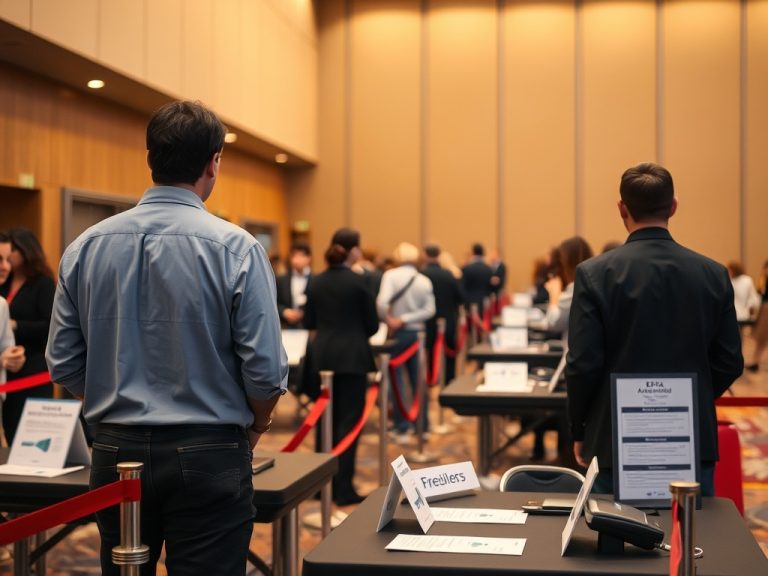
Guest logistics become complex when teams plan each department separately. Catering thinks in meal counts and service times. Signage thinks in arrows, rooms, entrances, and brand standards. Guest services thinks in arrival questions, check-in, accessibility, and problem resolution. The simplest way to connect those pieces is to map the guest journey from the first pre-event message to the final exit.
Write the journey as a plain sequence: confirmation email, arrival, parking or transit, entry, check-in, coat or bag needs, first directional decision, food and beverage moment, session movement, restroom access, help desk support, departure, and follow-up. Once that exists, each operational function can serve the same path instead of solving isolated tasks.
Build an owner-based logistics matrix
Create a matrix with columns for task, owner, decision needed, dependency, deadline, proof, and backup plan. Catering tasks may include final count date, dietary collection, service style, staff meals, water stations, and waste handling. Signage tasks may include arrival signs, room signs, accessibility signs, sponsor placements, prohibited areas, and removal plan. Guest logistics tasks may include entry lanes, VIP handling, lost tickets, accessibility requests, and staff escalation.
The owner column matters most. Avoid assigning a task to a department if the final decision actually sits with one person. A named owner can confirm, escalate, and close. A department label often becomes a shared inbox where decisions slow down. The check-in mistakes guide can help teams pressure-test entry flow when guest arrival is likely to create the biggest queue risk.
Coordinate without creating extra meetings
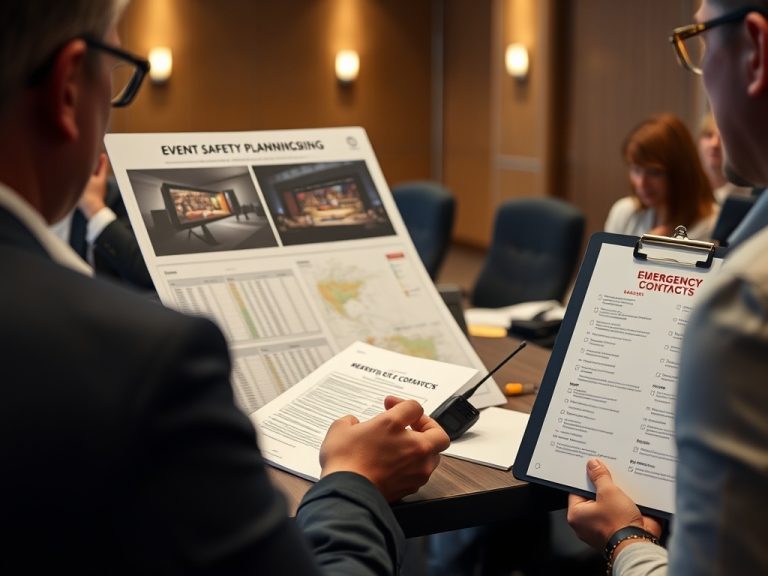
Replace broad status calls with checkpoint reviews. For example, hold one catering count checkpoint when registration data reaches a meaningful point, one signage proof checkpoint after the venue walkthrough, and one guest services checkpoint after the attendee communication draft is ready. Each checkpoint should answer a clear question, not invite open-ended updates.
Use visual proof wherever possible. A sign list is useful, but a marked floor plan is better. A catering menu is useful, but a service timeline tied to agenda breaks is better. A guest FAQ is useful, but a tested help desk script is better. Cvent's event planning guide is a practical reference for how planning tasks and timelines connect across event stages.
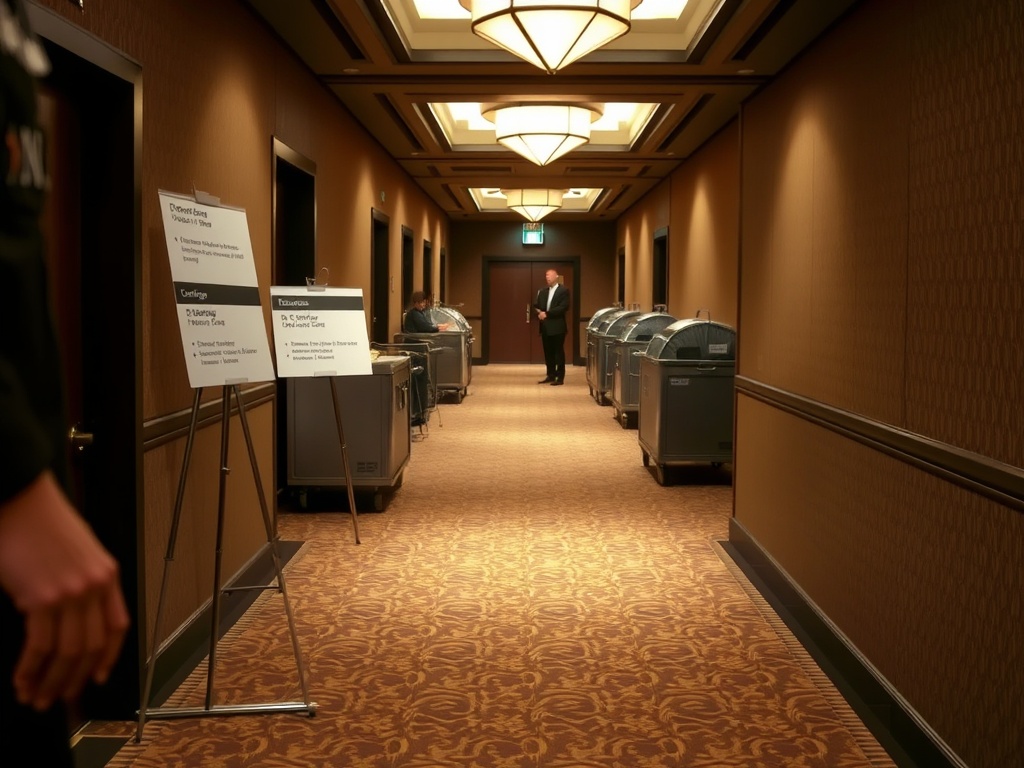
Coordination checkpoint table
| Area | Checkpoint question | Proof to review |
|---|---|---|
| Catering | Do counts, timing, dietary needs, and staff meals match the agenda? | Final count tracker, menu, service schedule |
| Signage | Can a first-time guest make every major decision without asking staff? | Floor plan with sign locations and proof files |
| Guest logistics | What happens when a guest has no ticket, arrives late, or needs access support? | Entry script, escalation list, help desk notes |
| Vendors | Who arrives when, where do they load in, and who signs off? | Vendor schedule, contact sheet, loading instructions |
Walk the plan before the run of show closes
The walkthrough should follow the attendee path, not the planner's departmental checklist. Begin outside the venue or at the first arrival point. Ask what a guest sees, what they need to decide, and who helps when something is unclear. Then move through registration, session rooms, food areas, restrooms, information points, and exits.
During the walkthrough, mark contradictions. A sign that points guests to a room is not useful if the room name in the agenda is different. A catering station may look convenient until a session change sends hundreds of people through the same hallway. These issues are easier to fix before the run of show becomes final.
Complexity Control Finish
Good logistics feel simple because the difficult coordination happened earlier. Map the guest journey, assign owners, use proof-based checkpoints, and walk the experience before locking the final run of show.
Educational note: venue rules, food service requirements, accessibility obligations, safety procedures, and local regulations vary. This article is informational only and does not replace legal, safety, travel, immigration, contractual, or professional advice. Verify requirements directly with organizers, venues, vendors, and qualified professionals.
Communication Rules for Moving Parts
Catering, signage, and guest logistics depend on the same truth being repeated in several places. The registration confirmation, reminder email, venue signs, staff script, and help desk notes should not describe the event differently. When one detail changes, assign one person to update every guest-facing and staff-facing reference point.
Create a short escalation rule for decisions that affect attendees. A menu substitution may need catering approval only. A room change may need signage, speaker, registration, accessibility, and staff updates. A change to arrival instructions may need email, website, front-desk, and transportation review. The escalation rule prevents small operational edits from becoming guest confusion.
Keep a final-day communication sheet for staff. It should include the event purpose, schedule snapshot, venue map, key contacts, common guest questions, exception handling, and emergency escalation route. Staff do not need every planning detail. They need the details that help them answer calmly, consistently, and accurately when guests are in front of them.
A second useful habit is to mark every task as guest-facing or backstage. Guest-facing details need clearer language, stronger proofreading, and faster escalation because they directly shape expectations. Backstage details need precision for staff and vendors but may not require public wording. This distinction helps teams spend energy where confusion would be most visible. It also keeps internal planning documents from becoming overloaded with marketing copy, while public materials stay simple enough for guests to act on without asking for help.
The final coordination review should happen close enough to the event that details are current, but early enough to fix problems. Bring the venue contact, catering owner, signage owner, guest services lead, and registration lead into the same review. Walk through the guest journey and pause at every decision point. If nobody can say who owns a moment, assign ownership before the run of show is approved.
Create one shared logistics matrix, test it from the guest's point of view, and only then approve the final operational schedule.
Use this article as a planning reference, then confirm event-specific details with official organizers, platforms, venues, and qualified professionals before taking action.