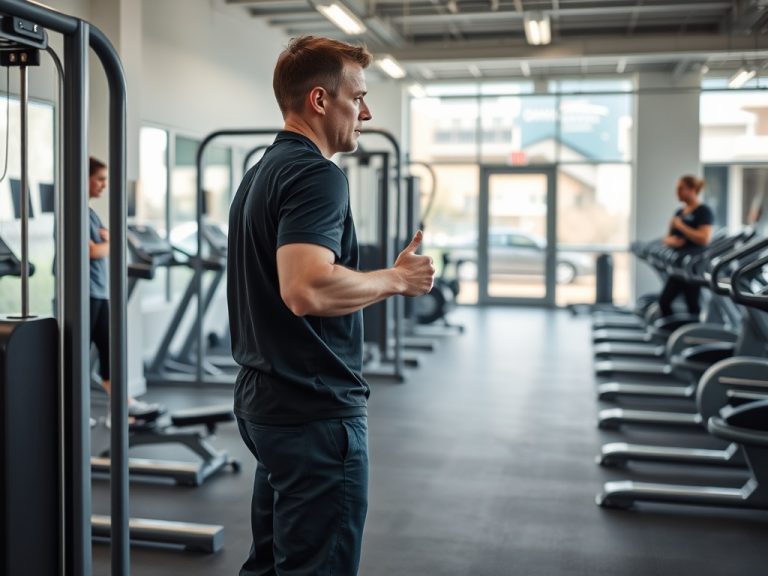
Feeling intimidated by the gym is usually easier to manage when the first goal is familiarity, not performance. A useful first visit can be short, simple, and deliberately low-pressure: learn the room, try a few movements you already understand, and leave with enough energy to want to return.
Key takeaway: Treat the first few gym visits as orientation sessions. Choose a small set of predictable exercises, keep the effort moderate, and measure success by showing up, learning equipment, and finishing without feeling overwhelmed.
Make the First Visit About Familiarity
A gym can feel difficult before any exercise begins because the environment contains unfamiliar equipment, unwritten social rules, noise, mirrors, and people who appear to know exactly what they are doing. None of those factors means you need a complicated plan. The CDC’s guidance for adding physical activity emphasizes choosing activities that fit your abilities and that you can sustain. That principle applies just as well to a first gym visit as it does to a weekly exercise routine.
Start by reducing the number of decisions you must make. Before you arrive, decide how long you plan to stay, where you will begin, and which two or three pieces of equipment you might use. If the facility offers an orientation, ask staff to show you how to adjust a treadmill, bike, cable station, or a few selectorized machines. Learning how to set up equipment is a legitimate training task, not wasted time.
A practical first visit might include five to ten minutes of easy walking or cycling, a few simple resistance exercises, and a short cool-down. The exact exercises matter less than choosing movements that feel understandable and controllable. If lower-body training interests you, reading about how to build glute strength without making every session a glute day can help you see how one muscle group fits inside a balanced program rather than becoming the whole program.
Use a Minimum-Viable Workout
Beginners often assume a workout only “counts” if it is long, exhausting, or full of unfamiliar exercises. That is a poor standard for the first few sessions. The better question is whether the session gives you enough practice to learn while leaving recovery and confidence intact.
One simple template is:
- Easy warm-up: move at a pace that lets you breathe comfortably and look around the room.
- One lower-body movement: for example, a leg press, supported squat pattern, or sit-to-stand variation.
- One upper-body push: such as a chest-press machine or an elevated push-up.
- One upper-body pull: such as a seated row or cable row.
- Optional easy cardio: finish with a few minutes of walking, cycling, or another activity you enjoy.
This is not a universal prescription. It is a low-complexity structure that can be adjusted to your health, mobility, equipment access, and experience. The CDC notes that some physical activity is better than none and that adults can build activity across the week rather than completing everything in one session. Its adult activity overview also places aerobic and muscle-strengthening work in the same broader weekly picture.
Lower the Social Pressure on Purpose
Gym anxiety is often partly logistical. If possible, visit at a quieter time, wear clothing that feels comfortable rather than performative, save your workout on your phone, and use headphones only if they help rather than make you less aware of the room. You can also choose machines near one another so you are not repeatedly searching for equipment.
It may help to remember that other people’s training does not set the standard for yours. A person doing heavy barbell work may have years of experience, a different goal, or a different body. Your job is not to copy them. Your job is to make your own next decision easier.
This is also where self-talk matters. If a missed rep, awkward equipment adjustment, or unfamiliar exercise immediately becomes evidence that you “do not belong,” returning will feel harder. A more durable approach is explored in the role of self-compassion in long-term fitness success, which treats mistakes as information rather than a character judgment.

Avoid the Mistakes That Make the Gym Feel Harder
Several early mistakes add stress without adding much value.
Trying to learn everything at once
A gym can contain dozens of machines and training styles. You do not need to understand all of them. Repeating a small group of movements for several visits gives you a stable reference point. Once setup and technique feel routine, add one new element at a time.
Training to exhaustion because you feel watched
Other people usually know far less about your workout than you imagine, and changing your effort to impress strangers can make technique worse. Keep early sets controlled. Stop when your form becomes uncertain or when the effort is clearly higher than you intended.
Treating soreness as proof of success
New exercise can create soreness, but soreness is not a scorecard. A first-week plan that makes stairs miserable for several days can become a barrier to returning. The goal is to create a repeatable pattern, not to prove how much discomfort you can tolerate.
Skipping food, water, or rest to “earn” the workout
Training usually feels worse when the rest of the day is poorly supported. If low energy is a recurring issue, how to eat for energy when you crash every afternoon offers a broader look at meal timing, food quality, and non-food causes of fatigue. Nutrition is not something you need to perfect before exercising, but basic fueling and hydration can make the experience more manageable.
Use Clear Progress Markers Instead of Confidence Alone
Confidence often follows evidence. Rather than waiting to “feel like a gym person,” look for concrete signs that the environment is becoming easier to use.
You are making progress when you can enter without spending several minutes deciding where to go, adjust familiar equipment without help, remember the order of your exercises, choose a sensible resistance, and leave knowing what you will repeat next time. Technique becoming more consistent is progress. Recovering normally between visits is progress. Asking a staff member a question instead of avoiding a machine is progress.
Once those basics feel stable, you can add a set, a small amount of resistance, another movement, or a little more cardio. Add only what serves a clear purpose. If pain, dizziness, unusual shortness of breath, or a health condition complicates exercise, seek individualized guidance from a qualified clinician or exercise professional rather than trying to push through uncertainty.
Your First Comfortable Week
For the first week, aim to make the gym predictable. Repeat a simple route through the room, keep notes about what felt easy or confusing, and make the next visit slightly more familiar than the last. You do not need a dramatic transformation to know the plan is working. You need evidence that returning is becoming easier.
A neutral next step is to schedule one or two short visits, write down a minimum-viable workout before you arrive, and judge the session by how repeatable it feels. Consistency can grow from comfort first and ambition second.