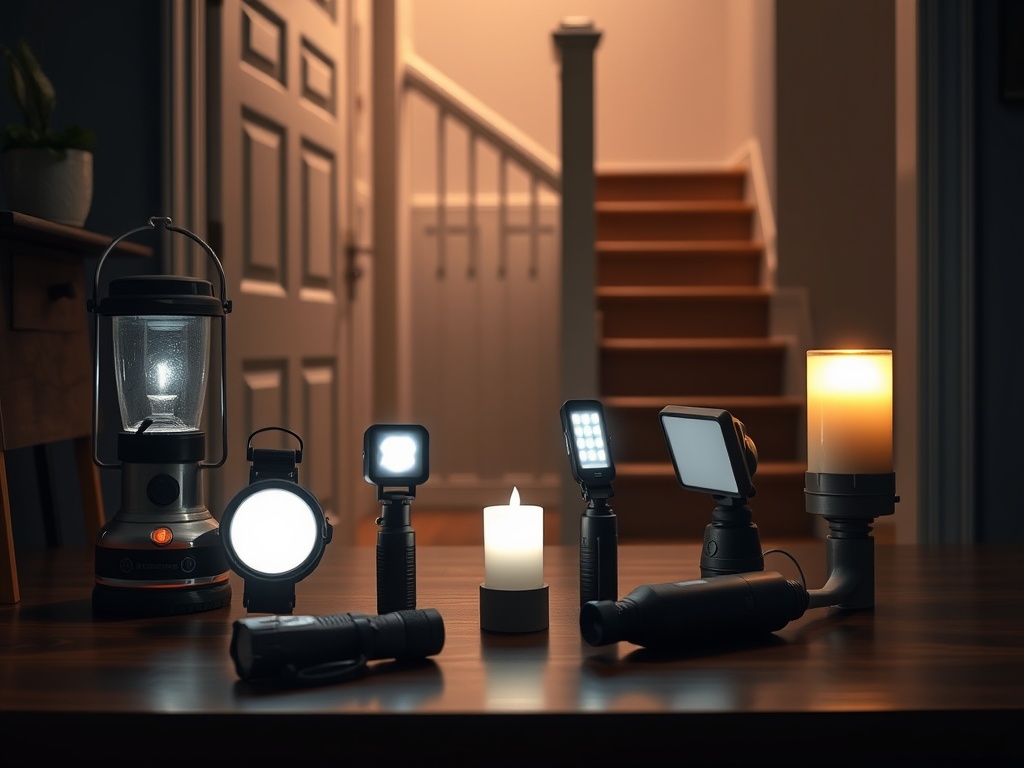
The best backup lighting plan uses several battery-powered light types rather than one device. Keep a bright handheld flashlight for inspection, headlamps for hands-free movement, wide-beam lanterns for rooms, and rechargeable or battery-backup lights for convenient everyday coverage, with spare power stored where you can find it in the dark.
Preparedness Pick: Build redundancy. A room lantern is useful for shared spaces, a headlamp is safer for stairs or repairs, a flashlight gives directional reach, and a small automatic outage light can help you find the rest of the kit. Avoid making candles your primary emergency lighting.
Start with the jobs you need light to perform
Emergency lighting is not only about brightness. During an outage, you may need to walk stairs, locate medication, check a breaker panel, prepare simple food, care for children or pets, inspect water intrusion, or leave the home. Each task benefits from a different beam pattern and form factor.
Think in layers. Ambient light helps a room feel usable. Task light helps with cooking, reading, or first aid. Directional light helps inspect a basement, yard, or utility space. Hands-free light matters when you are carrying supplies or using both hands.
Ready.gov preparedness materials include flashlights and extra batteries among basic power-outage supplies. That basic recommendation becomes more practical when you choose devices for specific household tasks instead of buying several identical flashlights.
LED lanterns are the best shared-room option
Battery-powered LED lanterns spread light across a larger area than most flashlights, which makes them useful for kitchens, living rooms, bathrooms, and family gathering spaces. Look for a stable base, a low mode that conserves power, and controls that are easy to find by touch.
A lantern does not need to produce stadium-level light. Very bright output can create glare in a small room and drain batteries faster. A lower setting is often enough for conversation, meals, or moving around, while a higher mode can be reserved for short tasks.
Choose a design that cannot easily tip when placed on a table. Hanging hooks can be useful, but avoid suspending a heavy lantern where it could fall. Keep at least one lantern on each commonly used floor so you are not navigating dark stairs to retrieve the only light.
Headlamps solve the hands-free problem
A headlamp is one of the most useful outage tools because the beam follows your line of sight while both hands remain free. That helps when checking a leak, carrying a child, opening a utility panel cover without touching electrical components, moving supplies, or walking outside.
Comfort matters if the headlamp will be worn for more than a few minutes. Look for an adjustable strap, simple controls, and a low setting that does not blind other people indoors. A red or very low night mode can be convenient but is not essential for every household.
Store headlamps where people can reach them without first finding another light. A bedside drawer, emergency bin, and entry cabinet are common locations. If batteries are removable, keep spares in their original packaging or a battery organizer that prevents terminals from contacting metal objects.
Handheld flashlights still earn a place
A handheld flashlight provides a concentrated beam for inspection and distance. It is useful for looking under furniture, checking exterior conditions from a safe location, finding labels on a shutoff, or signaling attention when appropriate.
Select a flashlight that is comfortable to grip and can stand on its tail if that feature is useful. Very small lights are convenient but easy to lose; very large lights can be awkward for children or older adults. A mid-sized light with common batteries can be easier to support during a prolonged outage.
If a flashlight uses rechargeable lithium-ion cells, follow the manufacturer instructions for charging, storage, temperature, and replacement. Do not use damaged or swollen batteries.
Avoid candles as the default emergency light
Open flames add fire risk at exactly the time when rooms may be crowded, people are moving in darkness, and normal safety systems may be stressed. The U.S. Fire Administration explicitly advises people to use flashlights instead of candles during power outages.
Battery-operated flameless candles can provide low-level orientation or comfort lighting without an open flame. They are not a substitute for a brighter flashlight or lantern, but they can be useful in bedrooms or bathrooms.
If a household chooses to use real candles despite the risk, follow local fire-safety guidance, keep them far from anything combustible, and never leave them unattended. A safer plan is to have enough battery lighting that candles are unnecessary.
Compare options by household use
| Lighting type | Best use | Strength | Limitation |
|---|---|---|---|
| LED lantern | Shared rooms | Wide, stable ambient light | Less directional outdoors |
| Headlamp | Stairs, repairs, carrying supplies | Hands-free beam | Can glare at other people |
| Flashlight | Inspection and distance | Directional and portable | Occupies one hand |
| Automatic outage light | Hallways and orientation | Turns on without searching | Battery capacity is limited |
| Rechargeable work light | Garage, basement, cleanup | Broad task lighting | Larger size and charging dependence |
| Flameless candle | Low-level comfort light | Simple and low glare | Not bright enough for most tasks |
Place lighting along real movement routes
Store lights where outages create the greatest risk: beside beds, near stairs, close to the main exit, in the kitchen, and near an emergency kit. Avoid keeping every device in one basement cabinet. If a storm damages the house or one room is inaccessible, distributed storage gives you another option.
Make sure everyone knows where the lights are and how to operate them. A complicated mode sequence is frustrating in the dark. For children or older adults, choose simple switches and stable devices that are easy to grip.
If planned home repairs will affect circuits or outlets, use the framework in how to choose between DIY, handyman, and contractor help before altering electrical systems. Backup light should support safe work, not encourage unsafe electrical troubleshooting during an outage.
Connect lighting to the rest of the home plan
Lighting works best as part of a broader preparedness kit that includes communication, water, medications, first-aid supplies, and any household-specific needs. Check smoke and carbon monoxide alarms, especially if you may use fuel-burning equipment during an outage.
The Consumer Product Safety Commission warns that portable generators can create deadly carbon monoxide hazards and says generators should never be operated inside a home, garage, basement, or shed. Its current generator and winter outage safety guidance also recommends battery-powered flashlights or lanterns instead of candles.
For homes already undergoing efficiency work, resilient lighting can be planned alongside energy-saving upgrades for older homes so outlets, charging locations, and emergency equipment storage are considered together.
Choose two or three complementary light types, test them, distribute them through the home, and maintain their batteries. That simple redundancy is more useful than owning one extremely bright device that is missing, discharged, or in the wrong room when the power fails.
This article is for general preparedness education. Follow manufacturer instructions and local fire, electrical, battery, and generator safety guidance. Seek qualified help for electrical or backup-power installations.[/